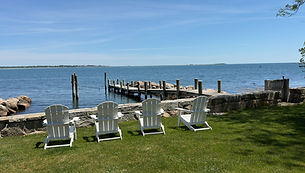
This garden is shared through the generosity of our hosts
Gary and Susan Danaher Buonanno


The hue and texture of the Westerly granite on this stately 1835 home are as integral to the garden as the plantings themselves. Long-established roses line the southern fence, while a narrow fern-lined path through the house connects two gardens that reflect different periods in the property’s history. The Southern Garden has changed little over the decades. Curving paths cross the lawn, Boston ivy climbs the stone walls, and peonies share the border with a celebrated collection of roses believed to have been planted by Phyllis Aiken, who lived here from 1954 to 1978 and was known for her love of roses. They are a beloved feature of the neighborhood, and the current owners have carefully restored and preserved the planting. The exact variety of roses Phyllis Aiken may have planted has not been definitively identified. However, they share characteristics with modern landscape roses, such as ‘Bonica,’ a variety introduced in France in 1982 that became one of the world’s most widely planted roses for its disease resistance, hardiness, repeat-flowering, and ease of care. Visitors who admire the roses in this garden and are looking for a similar effect in their own landscapes may wish to consider ‘Bonica.’ Visitors may also wish to note the paperbark maple (Acer griseum), introduced from China to American gardens in the early twentieth century. It remains one of the most distinctive ornamental trees for its cinnamon-colored bark, which peels in translucent curls and provides interest throughout the winter months. A stone archway and columned arbor lead to the Northern Garden. Its formal layout takes its cue from the house's stature and geometry, with rectangular terraces, bluestone paving, and a reflecting pool arranged along a central axis. The owner’s favorite feature is a remarkable climbing hydrangea. The species was first brought from Japan to Europe by the Russian botanist Carl Maximowicz in 1865, and was introduced to the United States in 1876 by Harvard University’s Arnold Arboretum in Boston, Massachusetts. It quickly becoming a staple vine for Country Place Era estates across New England. At 87 Main St., the vine has grown so completely through the stonework that preserving the plant meant preserving the wall as well. Unlike vines that twist around structures or use tendrils, climbing hydrangea attaches itself to vertical surfaces via aerial rootlets (holdfasts) that emerge directly from its woody stems. These rootlets secrete a natural adhesive compound to secure the vine to textured stone, brick, or bark. - contributed by Anna Bell McLanahan
Gardener: Susan Buonanno
Landscape Architect: Christopher Thorp
Installation: Erick Beverly, Cedar Ridge Landscaping
Poolhouse Architect: Meg Lyons Architects
Project Supervision: Mike Mahoney, Yankee Remodeler